Building a high-performing team is not simply about hiring talented employees. A successful team needs clear direction, effective communication, trust, accountability, and a leader who knows how to bring out the best in every individual.
Modern workplaces are changing rapidly. Employees expect more than instructions from their managers. They want meaningful work, opportunities to grow, recognition, flexibility, and a positive workplace culture. This is why effective leadership and management have become essential for long-term business success.
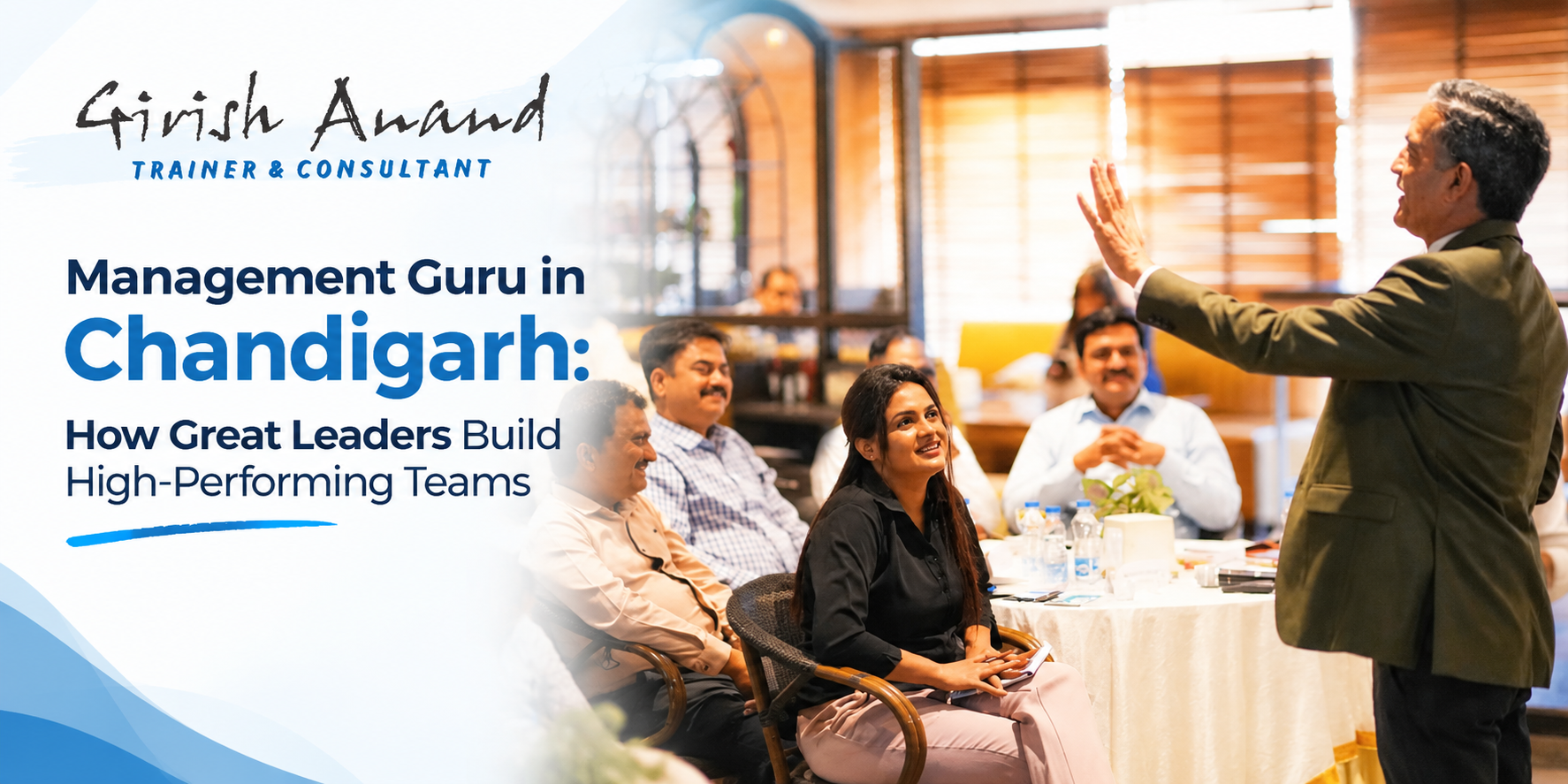
A management guru in Chandigarh can help business leaders, managers, and professionals understand practical leadership strategies that can improve team performance and workplace productivity.
What Is a High-Performing Team?
A high-performing team is a group of employees who work together toward common goals while maintaining strong communication, accountability, and collaboration.
These teams do not depend on one
person to complete everything. Instead, every member understands their responsibilities and contributes to the overall success of the organisation.
| Key Element | Importance |
| Clear Goals | Helps employees understand what they need to achieve |
| Communication | Reduces confusion and improves collaboration |
| Trust | Creates a comfortable and supportive workplace |
| Accountability | Encourages employees to take ownership |
| Recognition | Keeps employees motivated |
| Continuous Learning | Helps employees improve their skills |
| Leadership | Provides direction and inspiration |
How Great Leaders Build High-Performing Teams
1. Set Clear Goals and Expectations
Employees perform better when they know exactly what is expected from them. Great leaders establish clear objectives and explain how individual responsibilities contribute to larger business goals.
Instead of simply assigning tasks, effective managers explain the purpose behind the work. This gives employees a better understanding of how their contribution affects the organisation.
Goals should also be measurable and realistic. Regular discussions can help managers track progress and make adjustments when required.
2. Build Trust Within the Team
Trust is one of the most important foundations of a successful team.
Employees should feel comfortable sharing ideas, asking questions, discussing challenges, and even admitting mistakes. When people are afraid of criticism, they are less likely to communicate openly.
Great leaders create an environment where employees are respected and their opinions are valued. This encourages collaboration and improves workplace relationships.
3. Encourage Open Communication
Poor communication can result in missed deadlines, misunderstandings, conflicts, and reduced productivity.
Effective leaders encourage regular communication between team members and management. This can include one-on-one meetings, team discussions, feedback sessions, and informal conversations.
Good communication is not only about speaking. Leaders should also listen carefully to employee concerns and suggestions.
4. Recognise Employee Contributions
Employees want to know that their efforts matter.
Recognition does not always have to involve financial rewards. A simple appreciation message, public recognition, growth opportunity, or personal thank-you can make employees feel valued.
A leader who consistently recognises good work can create a more positive and motivated workplace.
5. Delegate Responsibilities Effectively
Micromanagement can limit creativity and reduce employee confidence.
Great managers understand the strengths of their team members and delegate responsibilities accordingly. Delegation gives employees opportunities to take ownership, develop new skills, and become more confident in their roles.
Managers should provide guidance when needed but also give employees enough freedom to complete their responsibilities independently.
6. Invest in Employee Development
High-performing teams are continuously learning.
Leaders can encourage employees to participate in workshops, training programs, mentoring sessions, and skill-development activities. Professional development benefits both employees and organisations.
When employees see a clear opportunity for career growth, they are more likely to remain engaged and committed to their work.
7. Create a Culture of Accountability
Accountability means taking responsibility for both achievements and mistakes.
Effective leaders do not use accountability simply as a way to punish employees. Instead, they use it to encourage ownership and improvement.
Managers can establish clear responsibilities, deadlines, performance expectations, and regular reviews. When something goes wrong, the focus should be on understanding the problem and finding a solution.
8. Adapt Leadership to Different Employees
Every employee is different.
Some people may need regular guidance, while others perform better when given independence. Some employees may respond well to public recognition, while others prefer private feedback.
A strong leader understands these differences and adapts their management approach accordingly.
This personalised approach can improve employee satisfaction and team performance.
Why Leadership Training Matters for Modern Managers
Being a good employee does not automatically make someone a good manager. Management requires a different set of skills, including communication, delegation, conflict resolution, decision-making, coaching, and strategic thinking.
Leadership training can help managers develop these skills and become more effective in their roles.
A management guru can provide practical insights into real workplace challenges and help professionals understand how leadership principles can be applied in everyday situations.
Qualities of an Effective Management Guru
When choosing a management expert or leadership trainer, organisations should look beyond titles and popularity. Practical experience and the ability to connect management concepts with real workplace situations are equally important.
Some important qualities include:
- Strong understanding of leadership and management
- Practical corporate experience
- Effective communication skills
- Ability to motivate and engage employees
- Understanding of modern workplace challenges
- Focus on measurable improvement
- Ability to customise training for different organisations
How Management Gurus Can Help Businesses
Businesses often face challenges such as low employee engagement, poor communication, workplace conflicts, ineffective leadership, and declining productivity.
A management guru can help organisations identify these challenges and introduce practical strategies to address them.
| Business Challenge | Possible Leadership Focus |
| Low Employee Engagement | Recognition and employee involvement |
| Poor Communication | Open communication practices |
| Team Conflicts | Conflict management and active listening |
| Low Productivity | Goal setting and accountability |
| Weak Leadership | Leadership development |
| High Employee Turnover | Engagement and career development |
| Poor Collaboration | Team-building and communication |
Building the Future of Leadership in Chandigarh
Chandigarh has a growing professional and business ecosystem, making effective leadership increasingly important for organisations across different industries.
From startups and small businesses to established companies, managers need to develop the ability to lead diverse teams, manage workplace changes, and maintain employee engagement.
The role of a management guru is therefore not limited to giving motivational speeches. A good management expert can help professionals develop practical skills that they can apply in real workplace situations.
Girish Anand: Turning Management Principles into Leadership Action
Great management is not just about managing tasks—it is about inspiring people, developing potential, and turning teams into high-performing units. This is where Girish Anand, a management professional, corporate trainer, and motivational speaker in Chandigarh, brings a practical approach to leadership development. His training focuses on helping managers and professionals strengthen leadership skills, improve communication, build stronger teams, and handle real workplace challenges with greater confidence. By combining practical management insights with interactive learning, Girish Anand helps organisations move beyond traditional management concepts and focus on leadership that creates meaningful results.
Final Thoughts
High-performing teams are created through consistent leadership, not overnight. Great managers set clear expectations, communicate openly, build trust, recognise employees, encourage learning, and give their teams opportunities to grow.
For professionals and organisations looking to strengthen their leadership capabilities, learning from a Management Guru in Chandigarh can provide valuable insights into modern management and team development.
The ultimate goal is not simply to manage employees but to create an environment where people feel motivated, responsible, supported, and empowered to perform at their best.