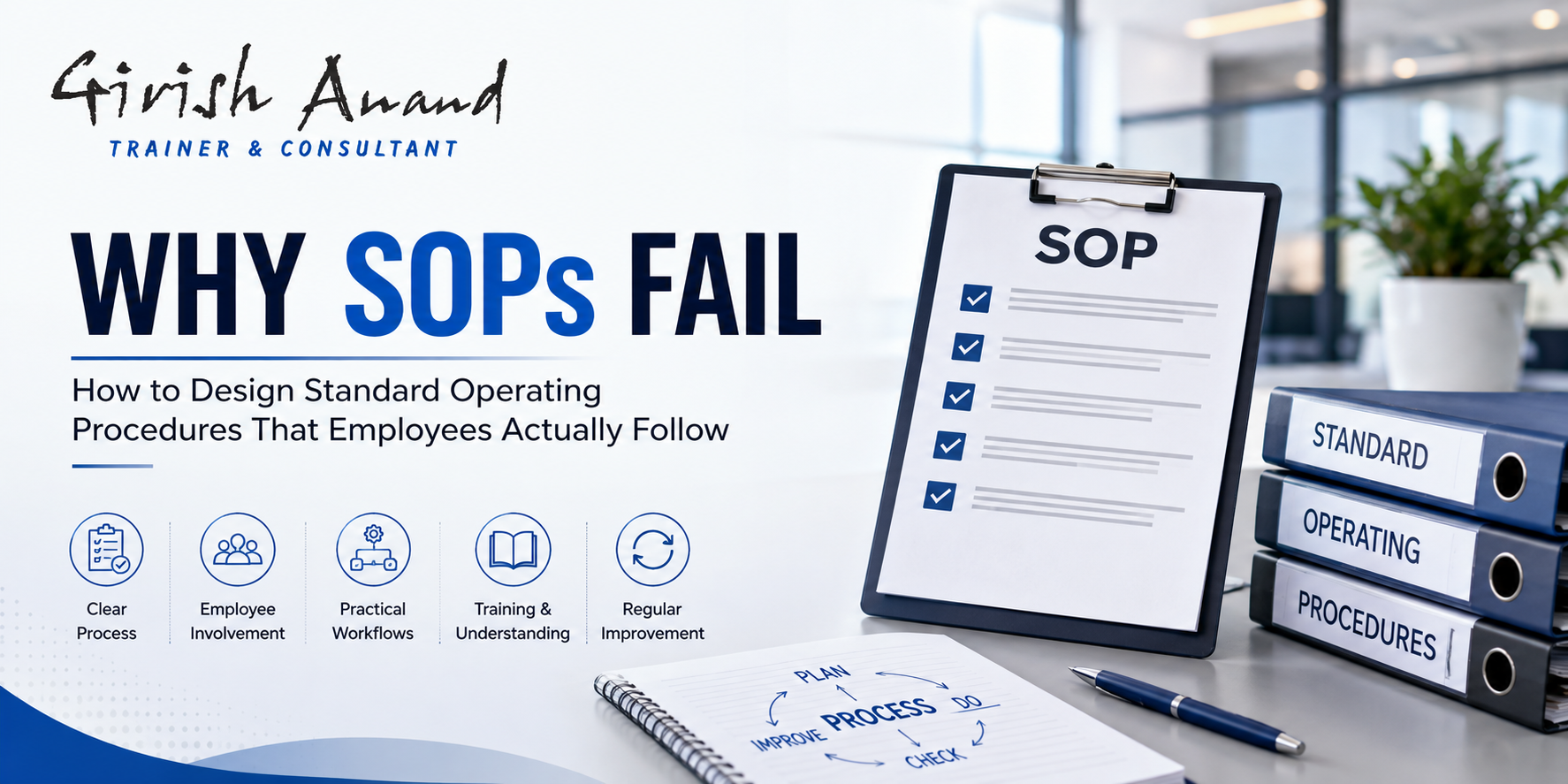
Standard Operating Procedures (SOPs) help businesses maintain consistency, improve productivity, and ensure employees follow the right processes. They explain how specific tasks should be completed, who is responsible for each step, and what standards need to be maintained. However, many organizations struggle to make their SOPs effective. Despite investing time in documentation, employees often ignore procedures, follow outdated instructions, or rely on their own methods to complete tasks.
The problem is not always the SOP itself. In many cases, procedures fail because they are too complicated, disconnected from daily work, or created without employee involvement. To make SOPs genuinely useful, businesses need to focus on practical instructions, employee understanding, and regular improvement.
Why Do Standard Operating Procedures Fail?
Understanding the reasons behind ineffective SOPs is the first step toward designing procedures that employees actually use.
SOPs Are Too Complicated
One of the most common reasons SOPs fail is that they contain too much information. Long paragraphs, technical language, and unnecessary details make procedures difficult to understand. Employees who need quick answers may avoid reading lengthy documents and instead ask colleagues or rely on memory.
An effective SOP should communicate instructions clearly. Use simple language, short paragraphs, numbered steps, and examples wherever necessary. Employees should be able to understand what they need to do without spending excessive time interpreting the document.
Employees Are Not Involved in the Process
SOPs are often created by managers or department heads without consulting the people who perform the tasks every day. As a result, the documented process may not reflect actual workplace challenges, available resources, or practical requirements.
Employees are more likely to follow procedures when they understand their purpose and have an opportunity to contribute. Involving team members during the drafting and testing stages helps businesses identify gaps, remove unnecessary steps, and create instructions that reflect real working conditions.
Procedures Do Not Match Actual Workflows
Sometimes, an SOP describes an ideal process rather than the process employees can realistically follow. It may include unnecessary approvals, outdated software instructions, or steps that no longer fit the current workflow.
When employees repeatedly encounter these problems, they may stop trusting the documentation. Reviewing procedures against actual working practices helps ensure that every step has a clear purpose and can be completed with the available tools and resources.
SOPs Are Difficult to Access
Even a well-written SOP becomes ineffective if employees cannot find it when they need it. Documents stored in scattered folders, outdated email attachments, or disconnected systems can make information difficult to locate.
Businesses should maintain a centralized and accessible source for their SOPs. Documents should have clear titles, consistent categories, and searchable content. Employees should also know where to find the latest approved version without having to contact their managers.
Training Is Missing
Sharing an SOP with employees does not guarantee that they understand it. Some processes require demonstrations, practical examples, or supervised practice before employees can perform them independently.
Without proper training, employees may misunderstand instructions or skip important steps. Organizations should introduce new procedures through short training sessions, demonstrations, and opportunities for employees to ask questions.
SOPs Are Never Updated
Business processes change as organizations introduce new technologies, hire employees, modify responsibilities, and respond to customer needs. If SOPs are not reviewed regularly, their instructions may become inaccurate or irrelevant.
Each procedure should have a designated owner, a version number, and a review date. Regular reviews help ensure that the document remains aligned with current operations and applicable internal requirements.
How to Design SOPs That Employees Actually Follow
Creating effective SOPs requires more than documenting a process. The goal is to make the right way of working clear, accessible, and practical for everyone involved.
Start With a Clear Purpose
Before writing an SOP, identify the problem it is intended to solve. Determine which task needs standardization, why consistency matters, and what successful completion looks like.
For example, an SOP for handling customer complaints might aim to reduce response delays, clarify escalation responsibilities, and ensure that customers receive consistent support. A clear purpose helps writers focus on essential instructions instead of adding unnecessary information.
Break Processes Into Simple Steps
Employees should be able to follow an SOP without guessing what comes next. Divide the process into logical steps and describe each action in a clear sequence.
For every important step, explain what needs to be done, who is responsible, which tools are required, and what outcome is expected. Include warnings or decision points where mistakes could create significant problems.
For complex processes, flowcharts, screenshots, checklists, and short instructional videos can make information easier to understand. Choose the format that best supports the task rather than making every SOP look identical.
Use a Consistent SOP Template
A standard template makes procedures easier to create, review, and navigate across departments. Although the structure can vary depending on the task, most SOPs benefit from including the following elements:
- Title and purpose: Explain the process and why it matters.
- Scope: Identify the activities, teams, or situations covered.
- Roles and responsibilities: Clarify who performs, approves, and reviews each step.
- Required resources: List the tools, systems, materials, or documents needed.
- Step-by-step instructions: Describe the process in the correct sequence.
- Exceptions and escalation: Explain what to do when something goes wrong.
- Review and approval details: Include the owner, version, approval status, and next review date.
This structure helps employees find the information they need while ensuring important details are not overlooked.
Test SOPs With the Employees Who Use Them
Before making an SOP mandatory, ask employees who perform the task to follow the instructions without additional guidance. Observe where they hesitate, misunderstand a step, or need information that the document does not provide.
This practical test can reveal issues that may not be obvious to the person writing the procedure. Collect feedback, revise unclear instructions, and test the updated version again if necessary.
An SOP should be considered ready when employees can use it successfully in realistic working conditions.
Make SOPs Easy to Access
Store approved procedures in a centralized knowledge base or document management system. Organize them by department, process, or role so employees can locate relevant instructions quickly.
Use clear naming conventions and maintain version control to prevent employees from using outdated documents. Where appropriate, link SOPs directly to the software, forms, or workflow in which the task is performed.
The easier it is to access the correct procedure, the more likely employees are to use it consistently.
Train Employees on the Reason Behind Each Procedure
Employees are more likely to follow an SOP when they understand why it exists. Training should explain the expected outcome, the risks of skipping important steps, and how the procedure supports business goals.
For new processes, combine written instructions with demonstrations or guided practice. For existing procedures, provide refresher training when significant changes occur or recurring mistakes indicate a knowledge gap.
Managers should also demonstrate the expected behavior. When leadership ignores documented procedures, employees may assume that following them is optional.
Assign Ownership and Review Procedures Regularly
Every SOP should have a person or team responsible for maintaining it. The owner should review the document when workflows change, recurring problems appear, or employees identify opportunities for improvement.
A scheduled review cycle can help, but businesses should also update procedures when important operational changes occur. Every revision should be approved where required, recorded in the document history, and communicated to affected employees.
This approach prevents SOPs from becoming outdated documents that no longer reflect the way work is performed.
How to Measure Whether Your SOPs Are Working
The effectiveness of an SOP should be evaluated through actual workplace results rather than document completion alone.
Businesses can monitor several indicators to determine whether procedures are helping employees perform tasks consistently.
Process compliance: Check whether employees complete required steps and follow the approved workflow.
Error and rework rates: Track recurring mistakes, rejected work, and tasks that need to be repeated.
Task completion time: Compare how long a process takes before and after improvements, while maintaining the required quality standards.
Training and onboarding time: Assess whether clear procedures help new employees learn responsibilities more efficiently.
Employee feedback: Ask users whether instructions are clear, accessible, and realistic.
Customer outcomes: Where relevant, monitor service quality, complaint resolution, and customer satisfaction.
These indicators help identify whether an SOP needs better instructions, additional training, workflow changes, or improved accessibility. The purpose of measurement is to improve the process, not simply to prove that employees have read a document.
Common Mistakes to Avoid When Creating SOPs
Even organizations with established documentation practices can make mistakes that reduce SOP effectiveness. Avoid writing procedures that focus on every minor detail while missing critical decision points. Do not copy processes from other departments without confirming that they fit the intended workflow.
Avoid treating employee signatures or document acknowledgments as proof of understanding. Similarly, do not update procedures without communicating important changes to the people who depend on them.
Most importantly, avoid creating SOPs solely to satisfy an internal documentation requirement. Every procedure should solve a real operational problem, support a defined outcome, and provide practical value to its users.
Conclusion
Effective SOPs are an important part of building consistent business processes and improving team performance. With the right approach to business management consulting, organizations can identify operational gaps, improve workflows, and establish processes that support long-term business growth.
By using clear language, involving employees, testing instructions, providing accessible documentation, and reviewing performance regularly, businesses can turn SOPs into practical tools for everyday operations.
The ultimate goal is not simply to create more documentation. It is to build reliable processes that employees understand, trust, and follow because they make their work easier and more consistent.