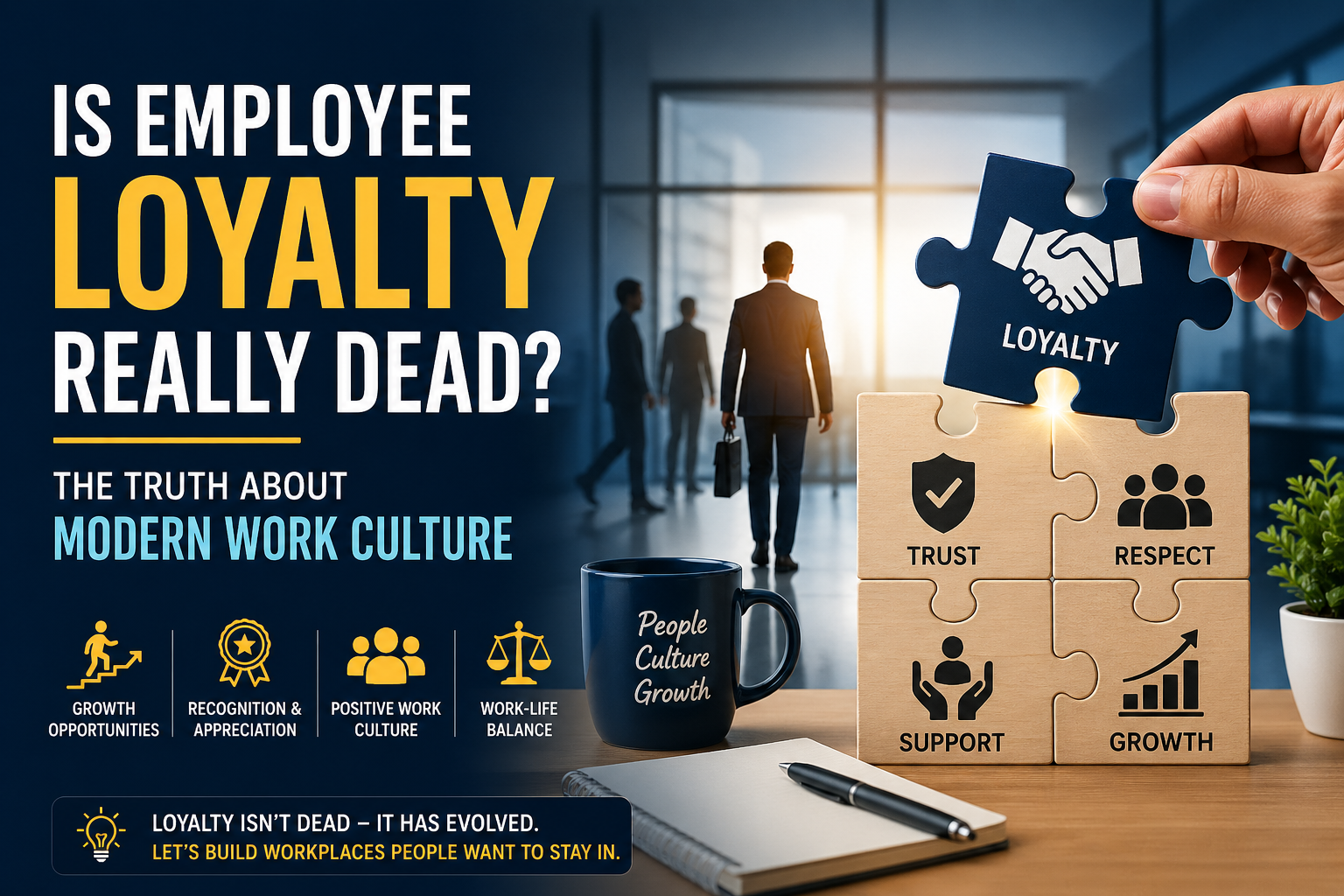
In today’s fast-changing corporate landscape, one question continues to spark debate across boardrooms and break rooms alike: Is employee loyalty really dead? With rising job switches, evolving career expectations, and increasing workplace stress, it may seem like loyalty has disappeared. But the truth is far more nuanced—employee loyalty hasn’t died; it has simply transformed.
Insights from corporate trainers like Girish Anand highlight that both organizations and employees must adapt to this new reality to build sustainable, long-term professional relationships.
Understanding the Shift in Employee Loyalty
Traditionally, loyalty meant staying with one company for decades, often regardless of job satisfaction. Employees valued job security above all else, and organizations expected long-term commitment in return.
However, today’s workforce—especially Millennials and Gen Z—operates differently. Loyalty is no longer about tenure; it’s about value exchange. Employees ask:
- Am I growing in this role?
- Is my work recognized?
- Do I feel respected and supported?
- Does this organization align with my goals?
If the answer is “no,” they are more willing to move on.
👉 So, loyalty isn’t gone—it’s now conditional and performance-driven.
Why Are Employees Leaving Jobs More Frequently?
Many assume salary is the primary reason employees switch jobs. In reality, several deeper factors are at play:
1. Lack of Recognition
Employees want their efforts to be acknowledged. When hard work goes unnoticed, motivation drops quickly.
2. Toxic Work Culture
A negative environment—poor communication, office politics, or lack of respect—pushes employees away faster than low pay.
3. Limited Growth Opportunities
Today’s professionals prioritize learning and advancement. A stagnant role is a major dealbreaker.
4. Poor Leadership
Managers play a critical role in employee retention. Ineffective leadership often leads to dissatisfaction and exits.
5. Work-Life Imbalance
Long hours, constant pressure, and lack of flexibility contribute to burnout and stress.
👉 These factors show that employees are not disloyal—they are simply unwilling to tolerate environments that hinder their growth and well-being.
The Role of Work Culture in Modern Loyalty
Work culture has become one of the most important drivers of employee retention. A healthy workplace promotes:
- Open communication
- Respect and inclusivity
- Recognition and rewards
- Learning and development
Organizations that invest in positive work culture naturally build stronger loyalty.
On the other hand, companies that ignore culture often face high attrition rates, regardless of compensation packages.
Loyalty vs Opportunity: A New Balance
Modern employees are not against loyalty—they just define it differently. Instead of blind commitment, they offer loyalty in exchange for:
- Career growth
- Meaningful work
- Supportive leadership
- Flexibility and balance
This creates a two-way relationship where both employer and employee share responsibility.
👉 Loyalty today is earned daily—not assumed.
Leadership’s Impact on Employee Loyalty
Leadership plays a crucial role in shaping how employees feel about their workplace.
Good leaders:
- Inspire and motivate teams
- Provide clear direction
- Recognize contributions
- Encourage growth
Poor leaders:
- Micromanage
- Ignore employee concerns
- Create pressure without support
Many employees don’t leave companies—they leave managers.
This is why organizations increasingly rely on corporate trainers and motivational speakers to develop strong leadership skills and improve workplace dynamics.
The Rise of Career-Driven Professionals
Today’s workforce is highly career-focused. Employees actively seek:
- Skill development
- New challenges
- Better opportunities
- Personal fulfillment
Job switching is no longer seen as instability—it’s viewed as career progression.
👉 This shift doesn’t mean disloyalty—it reflects ambition and self-awareness.
Office Stress and Its Impact on Retention
Workplace stress has become a major issue in modern organizations. High-pressure environments, unrealistic expectations, and lack of support lead to:
- Burnout
- Decreased productivity
- Mental fatigue
- Increased resignations
Companies that ignore employee well-being risk losing talent quickly.
On the other hand, organizations that promote work-life balance and mental wellness build stronger emotional connections with employees.
How Companies Can Build Modern Loyalty
To thrive in today’s environment, organizations must rethink their approach. Here are practical strategies:
1. Focus on Employee Experience
Create a workplace where employees feel valued and respected.
2. Offer Growth Opportunities
Provide training, mentorship, and career advancement paths.
3. Build Strong Leadership
Invest in leadership development to improve team relationships.
4. Encourage Work-Life Balance
Flexible policies and realistic expectations go a long way.
5. Recognize and Reward Contributions
Regular appreciation boosts morale and engagement.
6. Foster Open Communication
Employees should feel heard and understood.
The Truth: Loyalty Is Evolving, Not Ending
The idea that “employee loyalty is dead” is a misconception. What has changed is the foundation of loyalty.
Today:
- Employees are loyal to growth and respect, not just organizations
- Companies must earn loyalty through culture and leadership
- Relationships are more dynamic and mutually beneficial
This evolution is not a problem—it’s an opportunity for organizations to become better, more human-centric workplaces.
Final Thoughts
Employee loyalty in the modern world is no longer about staying in one job forever—it’s about building meaningful, growth-oriented relationships between employers and employees.
Organizations that understand this shift will not only retain talent but also create a motivated, high-performing workforce.
And for professionals, the key is to seek environments that align with their values, support their growth, and respect their well-being.
👉 Because in today’s corporate world, loyalty is not dead—it’s just smarter.