Every successful business is built on a series of decisions. Whether you’re launching a new product, hiring key employees, investing in technology, or entering a new market, the quality of your decisions directly influences your organization’s success.
Great business leaders are not those who always make perfect decisions—they are those who consistently make informed, timely, and strategic decisions while learning from every outcome.
In today’s fast-changing business environment, improving your decision-making skills is no longer optional. It is one of the most valuable leadership abilities you can develop.
In this guide, we’ll explore why decision-making matters, common mistakes leaders make, and practical techniques to help you make better business decisions.
Why Decision-Making Skills Matter in Business
Every day, business owners and managers face decisions that affect:
- Revenue and profitability
- Customer satisfaction
- Employee engagement
- Business growth
- Innovation
- Company culture
- Long-term sustainability
Poor decisions can result in missed opportunities, financial losses, and declining employee morale. On the other hand, well-informed decisions help businesses stay competitive, adapt to change, and achieve sustainable growth.
Characteristics of Effective Business Decision-Makers
Successful leaders often share several common qualities:
They Think Long-Term
Instead of focusing only on immediate results, they consider how today’s decisions will impact the future of the organization.
They Gather Relevant Information
They rely on facts, market research, financial data, and expert opinions rather than assumptions.
They Stay Calm Under Pressure
High-performing leaders avoid emotional reactions and remain composed during challenging situations.
They Take Responsibility
Strong leaders own both successful and unsuccessful decisions and use every experience as a learning opportunity.
Common Decision-Making Mistakes to Avoid
Understanding common pitfalls can help you make smarter choices.
1. Making Decisions Based on Emotions
While emotions are natural, they shouldn’t dominate important business decisions. Emotional reactions can cloud judgment and lead to unnecessary risks.
Tip: Pause, evaluate the facts, and seek objective input before making major decisions.
2. Analysis Paralysis
Some leaders delay decisions because they want every possible piece of information.
Unfortunately, waiting too long often means missing valuable opportunities.
Remember: Perfect information rarely exists.
3. Ignoring Data
Relying solely on intuition without reviewing relevant data increases the chances of making poor decisions.
Use analytics, customer feedback, and financial reports to support your choices.
4. Confirmation Bias
People naturally seek information that supports what they already believe.
Challenge your assumptions by considering different perspectives.
5. Fear of Failure
Many businesses lose opportunities because leaders hesitate to act.
Calculated risks often lead to innovation and growth.
Practical Ways to Improve Decision-Making Skills
1. Clearly Define the Problem
Many organizations solve the wrong problem because they never clearly identify the real issue.
Ask questions such as:
- What exactly is happening?
- Why is this problem occurring?
- What outcome are we trying to achieve?
A clear problem statement leads to better solutions.
2. Collect Reliable Information
Avoid making decisions based on incomplete information.
Consider:
- Market trends
- Customer feedback
- Financial reports
- Employee insights
- Competitor analysis
- Industry research
The more relevant information you have, the stronger your decisions become.
3. Consider Multiple Solutions
Don’t settle for the first idea.
Brainstorm several alternatives and evaluate the advantages and disadvantages of each.
This increases the likelihood of finding the best solution.
4. Evaluate Risks and Rewards
Every business decision involves some level of risk.
Ask yourself:
- What could go wrong?
- What is the potential reward?
- Can the risks be managed?
Balancing risk with opportunity leads to smarter decisions.
5. Use Decision-Making Frameworks
Structured approaches simplify complex situations.
Popular frameworks include:
SWOT Analysis
Evaluate:
- Strengths
- Weaknesses
- Opportunities
- Threats
Cost-Benefit Analysis
Compare expected benefits with costs before investing resources.
Decision Matrix
Assign scores to multiple options based on predefined criteria.
These tools reduce bias and improve objectivity.
6. Seek Diverse Perspectives
No leader has all the answers.
Consult:
- Team members
- Industry experts
- Mentors
- Customers
Different viewpoints often reveal opportunities and risks you may have overlooked.
7. Improve Your Critical Thinking
Critical thinking helps separate facts from assumptions.
Develop the habit of asking:
- Is this information reliable?
- What evidence supports this?
- Are there alternative explanations?
- What assumptions am I making?
Better questions lead to better decisions.
8. Learn from Past Decisions
Review previous business decisions regularly.
Ask:
- What worked well?
- What could have been improved?
- What lessons can be applied next time?
Continuous reflection strengthens future decision-making.
9. Manage Stress Effectively
Stress reduces clarity and increases impulsive decisions.
Improve focus by:
- Taking short breaks
- Prioritizing tasks
- Exercising regularly
- Getting enough sleep
- Practicing mindfulness or meditation
A calm mind makes better decisions.
10. Be Willing to Adapt
Business environments change quickly.
A decision that made sense six months ago may no longer be appropriate.
Successful leaders monitor results and adjust their strategies when needed.
Flexibility is a sign of strong leadership—not weakness.
The Role of Data in Business Decision-Making
Modern businesses have access to valuable insights through data.
Useful sources include:
- Sales reports
- Customer behavior analytics
- Website performance
- Market research
- Employee feedback
- Financial dashboards
Data should support—not replace—good judgment. Combining analytics with experience helps leaders make balanced decisions.
How Great Leaders Make Better Decisions
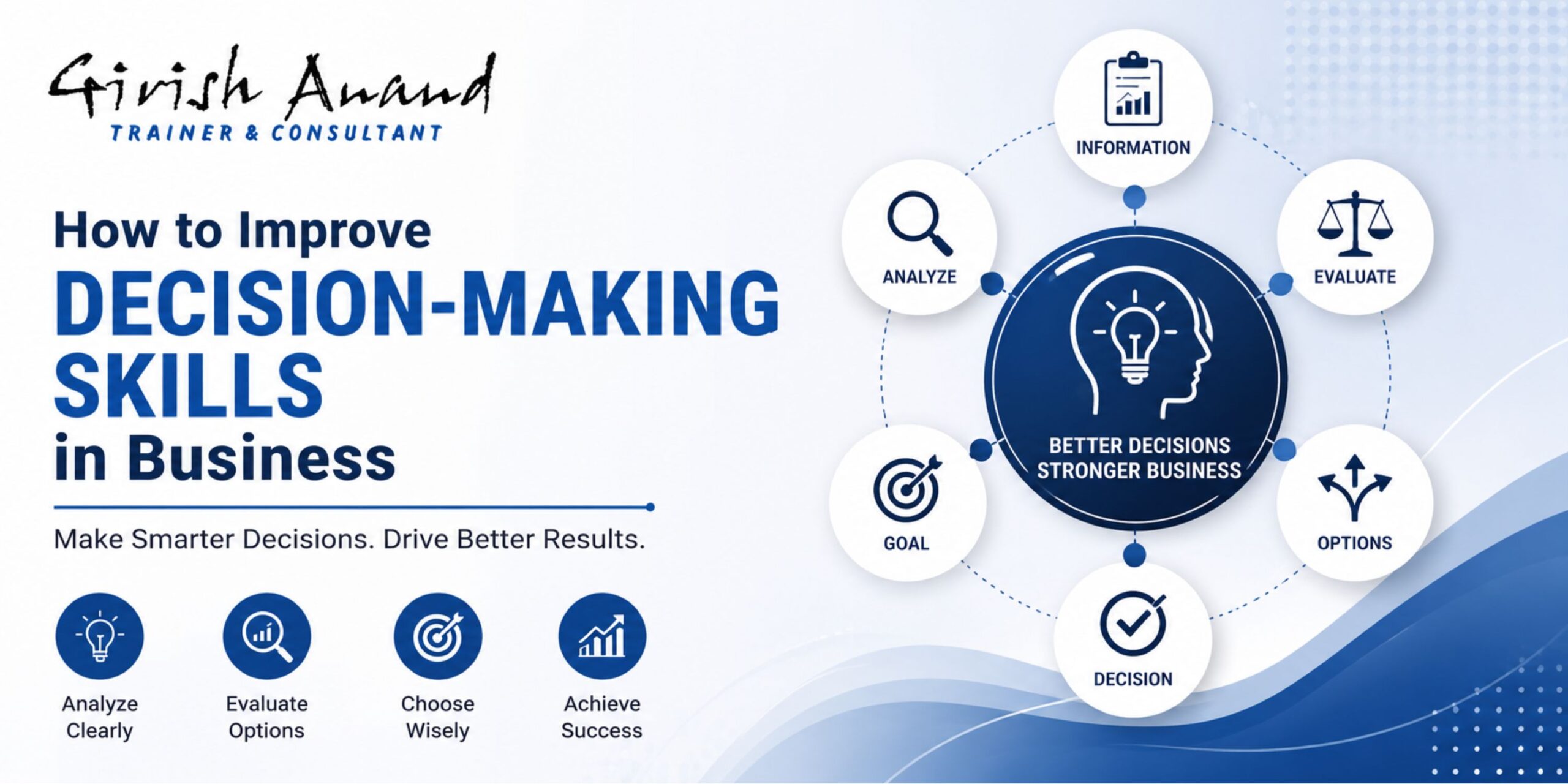
Successful leaders typically follow a simple process:
- Identify the real problem.
- Gather relevant information.
- Explore multiple options.
- Assess risks and opportunities.
- Consult trusted advisors.
- Make a timely decision.
- Monitor the results.
- Learn and improve continuously.
This disciplined approach reduces uncertainty and builds confidence.
Building a Decision-Making Culture in Your Organization
Strong organizations encourage effective decision-making at every level.
You can foster this culture by:
- Empowering employees to make informed decisions.
- Encouraging open communication.
- Rewarding thoughtful risk-taking.
- Learning from mistakes instead of assigning blame.
- Providing leadership and problem-solving training.
When employees feel trusted, they become more engaged, innovative, and accountable.
Final Thoughts
Decision-making is one of the defining skills of successful business leaders. While no one can predict every outcome, improving your ability to analyze situations, evaluate options, and act with confidence can significantly strengthen your business performance.
By combining data, critical thinking, collaboration, and continuous learning, you can make decisions that drive growth, inspire your team, and create lasting value.
Remember, leadership isn’t about making perfect decisions every time—it’s about making informed choices, learning from experience, and adapting as your business evolves.