For generations, we have been taught a simple formula for success: work hard, stay dedicated, and success will follow. While hard work remains an essential ingredient for achieving goals, today’s world has become far more complex. Success is no longer determined solely by the number of hours you put in or how tirelessly you work.
Many professionals, entrepreneurs, and employees spend countless hours working hard, only to find themselves stressed, exhausted, and unfulfilled. Despite their efforts, they may struggle to achieve the level of success, happiness, or balance they desire. This raises an important question: Is hard work alone enough?
The answer is no.
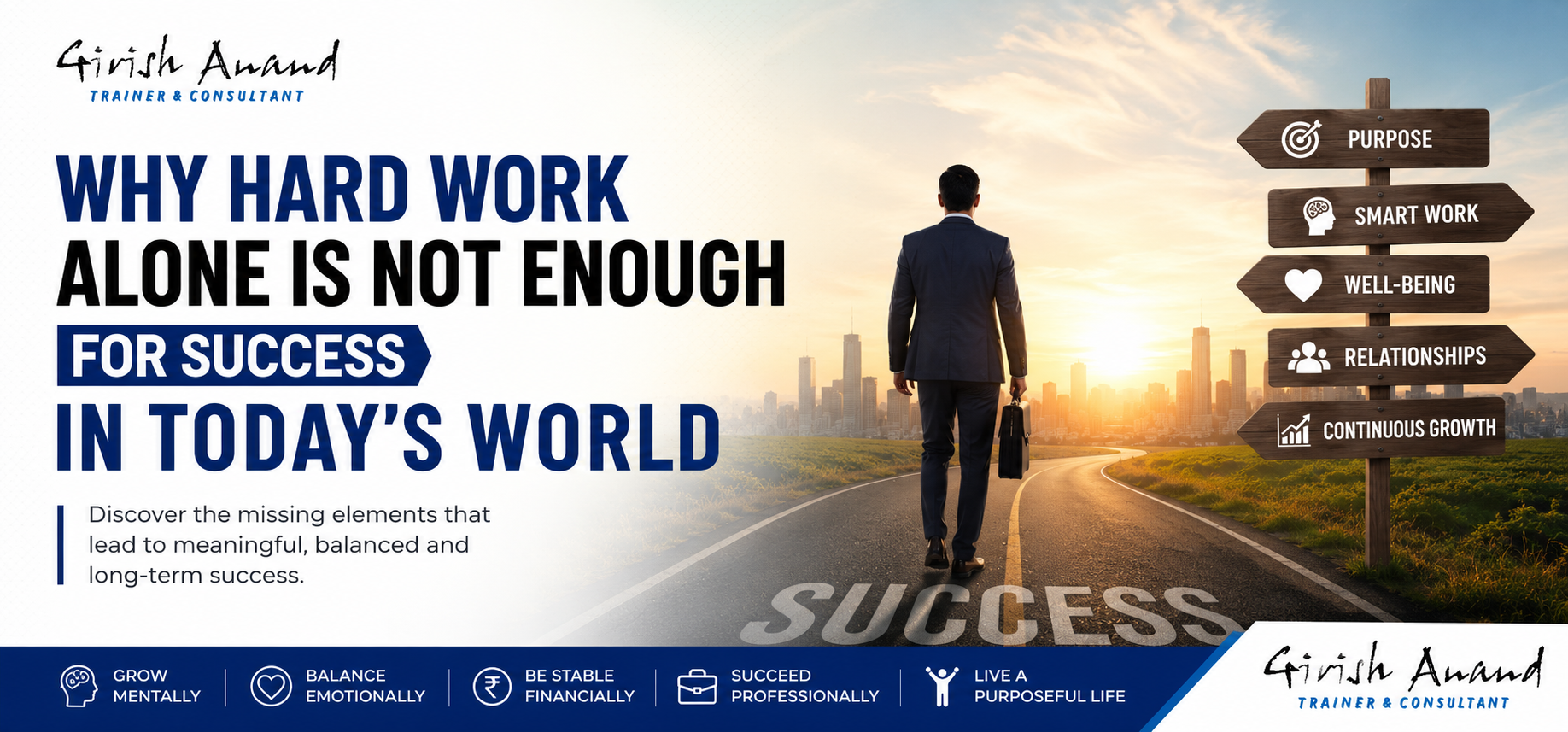
In today’s rapidly changing environment, true success requires a combination of hard work, smart decision-making, continuous learning, emotional intelligence, meaningful relationships, and a strong sense of purpose.
The Myth of Hard Work Alone
Hard work is often glorified as the ultimate path to achievement. While dedication and persistence are important, relying solely on hard work can sometimes lead to burnout rather than success.
Consider two individuals working equally hard. One continuously learns new skills, builds professional networks, manages time effectively, and maintains a healthy work-life balance. The other focuses only on working longer hours. Over time, the first individual is likely to experience greater growth and satisfaction.
The difference lies not in effort but in strategy.
Success Requires Smart Work
In today’s digital age, working smarter has become just as important as working harder.
Technology, automation, and artificial intelligence have transformed industries. Professionals who adapt, innovate, and leverage available tools often achieve better results than those who simply increase their workload.
Smart work involves:
- Prioritizing high-impact tasks
- Managing time effectively
- Leveraging technology
- Delegating when necessary
- Focusing on outcomes rather than hours worked
Hard work creates momentum, but smart work directs that momentum toward meaningful results.
The Importance of Continuous Learning
The skills that were valuable a few years ago may not be enough to thrive today. Industries evolve rapidly, and professionals must continuously update their knowledge.
Successful individuals invest in personal and professional development by:
- Learning new technologies
- Improving communication skills
- Enhancing leadership capabilities
- Developing emotional intelligence
- Staying informed about industry trends
Growth happens when learning becomes a lifelong habit.
Emotional Intelligence Matters More Than Ever
Technical skills may help people secure opportunities, but emotional intelligence often determines long-term success.
Emotional intelligence includes:
- Self-awareness
- Empathy
- Relationship management
- Adaptability
- Effective communication
People who understand and manage emotions effectively tend to build stronger relationships, lead teams successfully, and handle challenges with resilience.
In many workplaces, emotional intelligence is becoming a greater predictor of success than technical expertise alone.
Success Without Health Is Not Success
Many professionals sacrifice their health in pursuit of career goals. Long working hours, stress, lack of sleep, and poor work-life balance can lead to physical and mental exhaustion.
True success should include:
- Good physical health
- Mental well-being
- Healthy relationships
- Personal fulfillment
When health suffers, productivity eventually declines. Sustainable success requires maintaining balance across all areas of life.
The Power of Purpose
One of the biggest reasons people feel dissatisfied despite professional achievements is the absence of purpose.
A sense of purpose provides direction and motivation. It helps individuals stay focused during difficult times and find meaning beyond financial rewards.
People who align their work with their values and goals often experience greater satisfaction and long-term success.
Purpose transforms work from a daily obligation into a meaningful journey.
Building Strong Relationships
No one achieves success entirely alone. Professional growth often depends on collaboration, mentorship, networking, and trust.
Successful individuals invest time in building meaningful relationships with:
- Colleagues
- Clients
- Mentors
- Industry peers
- Family and friends
Strong relationships create opportunities, support personal growth, and contribute to overall happiness.
Avoiding Burnout in the Modern Workplace
Burnout has become increasingly common among professionals who constantly push themselves without taking time to recharge.
Signs of burnout include:
- Chronic fatigue
- Reduced productivity
- Loss of motivation
- Increased stress
- Emotional exhaustion
To prevent burnout, individuals should:
- Set realistic goals
- Take regular breaks
- Prioritize self-care
- Maintain work-life balance
- Focus on long-term sustainability
Success should energize your life, not consume it.
Defining Success on Your Own Terms
Society often defines success through job titles, income, or material possessions. However, true success looks different for everyone.
For some, success means career growth. For others, it means family happiness, personal freedom, health, or making a positive impact.
The most fulfilled individuals define success according to their own values rather than external expectations.
Conclusion
Hard work will always be an important part of success, but it is no longer enough on its own. In today’s world, success requires balance, adaptability, continuous learning, emotional intelligence, strong relationships, and a clear sense of purpose.
The goal should not simply be to work harder. The goal should be to work smarter, grow consistently, maintain well-being, and create a meaningful life.
When hard work is combined with purpose, learning, and balance, success becomes not only achievable but truly fulfilling.