Imagine reaching the office on time, completing your work efficiently, and still being questioned, while someone working late is praised. Sounds familiar?
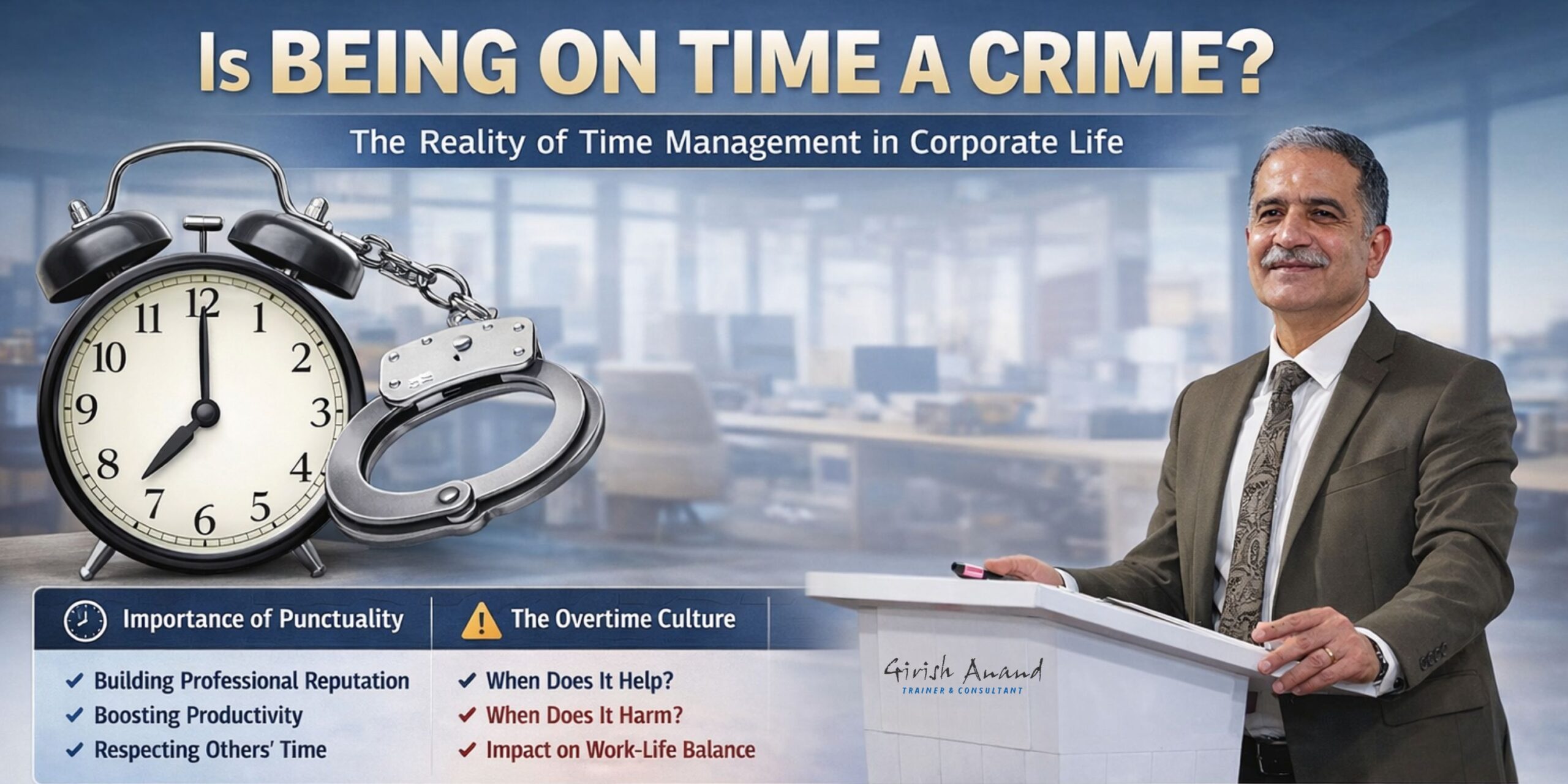
This paradox has led many professionals to ask: “Is being on time a crime in today’s corporate world?”
As organizations shift towards flexible work models and performance-driven cultures, the true value of punctuality is often misunderstood. This blog uncovers the reality behind time management, overtime culture, and what truly defines professionalism today.
The True Meaning of Being On Time
Being on time is not just about clocking in at 9 AM or attending meetings punctually. It reflects a deeper sense of discipline, commitment, and respect for others’ time.
Professionals who value punctuality are often perceived as:
- Reliable and trustworthy
- Well-organized
- Focused on productivity
- Respectful towards team members
In essence, punctuality is a silent indicator of professionalism.
Why Punctuality Still Matters in Corporate Life
Despite changing work environments, punctuality continues to play a crucial role in career growth.
1. Builds Professional Reputation
Employees who consistently meet deadlines and arrive on time naturally build a strong professional image. Managers and leaders trust individuals who respect time.
2. Enhances Productivity
When you start your day on time, your workflow becomes structured. This leads to better planning, reduced stress, and improved output.
3. Strengthens Team Coordination
Corporate work is rarely individual. Teams rely on synchronization. If one person delays, the entire workflow can be affected.
4. Shows Respect for Others
Being punctual is a sign that you value other people’s time, whether it’s a meeting, deadline, or project delivery.
The Reality of Overtime Culture
One of the biggest contradictions in corporate life today is the glorification of overtime.
Many employees believe that staying late at the office reflects dedication and hard work. However, the reality is quite different.
When Overtime Adds Value
- During critical project deadlines
- In urgent business situations
- When compensated fairly with incentives
When Overtime Becomes Harmful
- When it becomes a daily habit
- When it reduces efficiency instead of improving it
- When it impacts mental and physical health
- When it disrupts work-life balance
In many cases, working smarter during regular hours is far more effective than working longer hours.
Is Being On Time Undervalued Today?
With the rise of remote work, flexible schedules, and digital communication, traditional time structures have evolved.
Some common workplace trends include:
- Flexible login and logout timings
- Remote and hybrid work culture
- Outcome-based performance evaluation
- Less focus on strict office hours
Because of these changes, punctuality is sometimes misunderstood as less important. However, this is a myth.
Time discipline has not lost its importance—it has simply changed its form.
Today, being “on time” means:
- Meeting deadlines consistently
- Attending virtual meetings promptly
- Delivering tasks within committed timelines
- Managing time effectively without supervision
Time Management: The Real Game-Changer
The real issue is not whether employees are on time, but how effectively they manage their time.
Here are some practical time management tips for corporate professionals:
1. Plan Your Day in Advance
Start your day with a clear plan. Prioritize important tasks and avoid unnecessary distractions.
2. Avoid Multitasking
Focus on one task at a time. Multitasking often reduces efficiency and increases errors.
3. Set Realistic Deadlines
Overcommitting leads to delays and stress. Always set achievable timelines.
4. Take Short Breaks
Continuous work reduces productivity. Short breaks help refresh the mind.
5. Limit Unproductive Meetings
Meetings should be purposeful and time-bound. Avoid unnecessary discussions.
Work-Life Balance vs Overtime Culture
One of the biggest challenges professionals face today is maintaining a healthy work-life balance.
Excessive overtime can lead to:
- Burnout
- Reduced creativity
- Decreased job satisfaction
- Health issues
Organizations are now realizing that a balanced employee is a productive employee.
Modern companies are focusing on:
- Flexible work schedules
- Mental wellness programs
- Performance-based evaluation
- Employee engagement strategies
This shift proves that productivity is no longer measured by hours spent, but by results delivered.
The Shift in Modern Corporate Culture
The corporate world is rapidly evolving. Traditional systems are being replaced by smarter, more flexible approaches.
Key Changes Include:
- Remote and hybrid work models
- Digital communication tools
- Performance-driven culture
- Increased focus on employee well-being
In this new environment, time management is more important than ever. Without direct supervision, professionals must take responsibility for their schedules and productivity.
Final Thoughts: Is Being On Time a Crime?
The answer is simple—No, being on time is not a crime. It is a strength.
However, the corporate world today values more than just punctuality. It values:
- Efficiency
- Productivity
- Accountability
- Smart work
Being on time alone is not enough—but it is the foundation of professional success.
If combined with effective time management, discipline, and a results-oriented mindset, punctuality becomes a powerful tool for growth.
Conclusion
In a world where work culture is constantly evolving, one thing remains constant—time is your most valuable asset.
Whether you are a corporate employee, manager, entrepreneur, or student entering the workforce, mastering time management will always give you a competitive edge.
So the next time someone asks, “Is being on time a crime?”
Remember—it’s not just about being on time, it’s about making your time count.